
REVIEW · SPAIN FISHING TRIPS
Barbate: Boat Tour to the Almadraba of Conil (Tuna Fishing)
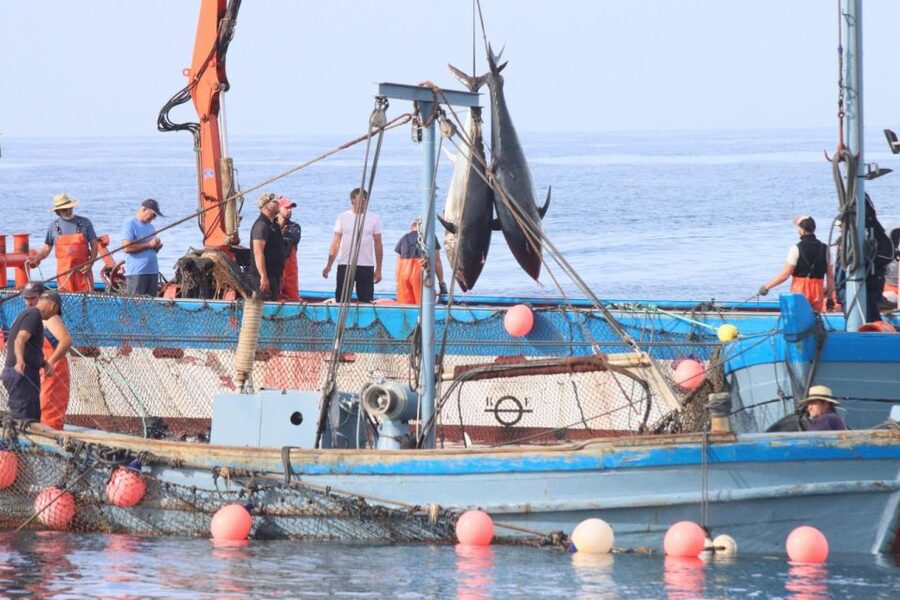
The heart of this trip is a rare view of the Almadraba de Conil, a huge fixed net system that catches migrating Atlantic bluefin tuna near the Strait of Gibraltar. From the Marine Atlantes boat, you watch the final net, called the codend, rise from roughly 30 metres below the surface as the fishing crew carries out the levantá, the critical lift that decides the day’s catch.
I like two things here: you see a real working fishery rather than a staged demonstration, and the crew explains how currents, tides, nets, anchors, boats, and divers must all line up. The breakfast on the way out and tuna tasting with drinks on the way back add real value to a costly outing. The main drawback is the sea itself. A rough crossing can make the long boat ride unpleasant, so bring sun protection and consider motion-sickness medicine.
Key points to know
- Watch a 3,000-year-old fishing method at work: The Almadraba uses a carefully placed maze of nets and large anchors to intercept bluefin tuna on their annual migration.
- Stay about 100 metres from the fishing action: Marine Atlantes positions its boat away from the codend so the professional crew can work without interference.
- Time matters more than the clock: The levantá begins around the change of tide, when currents in the Strait ease.
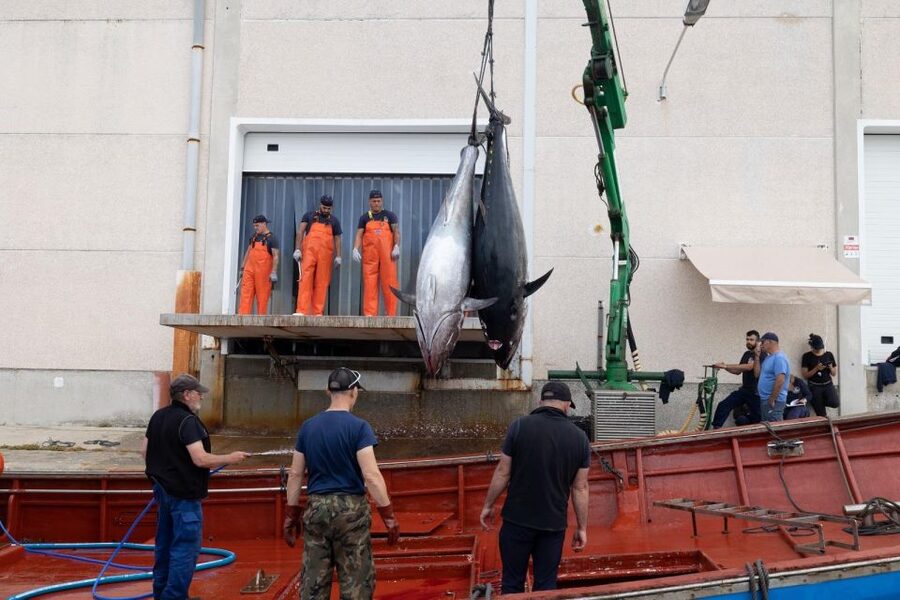
- Expect a real working operation: You see the catch secured, the codend lifted, tuna transferred, and the first boat leave for unloading.
- Taste tuna in several styles: Breakfast includes coffee and pastries, followed by a tuna tasting and drinks on the return trip.
- Build in spare days: Weather and the fishery’s quota can change the date, so two or three days in the area gives you useful flexibility.
Why the Conil Almadraba matters
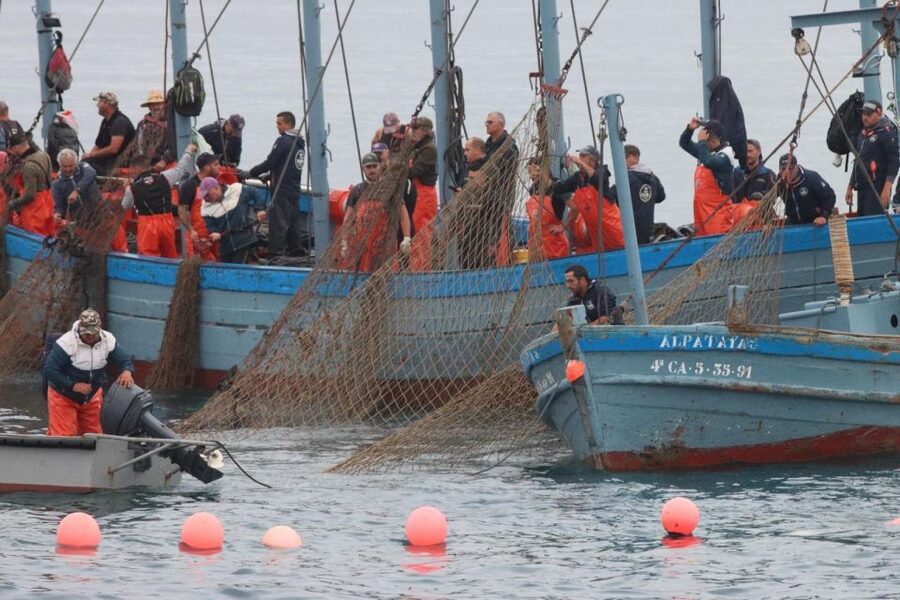
The Almadraba is not simply a net dropped into the sea. It is a large, fixed fishing system placed according to the seabed, the tuna’s route, local currents, and the position of the Strait. Its maze of nets guides fish toward the final holding area, or codend, where the last part of the operation takes place.
The method reaches back roughly three thousand years. The point of this tour is not just to watch tuna being caught, but to understand how people in this part of Andalusia have worked with the annual movement of bluefin tuna for centuries.
Atlantic bluefin tuna pass these waters on their way through the Strait of Gibraltar toward the Mediterranean. The crew explains that migration and how the fishery developed around it. That context makes the scene offshore easier to follow. Without it, you might see boats, ropes, and nets and miss the careful order behind the work.
I find this historical and practical explanation more useful than a simple sightseeing cruise. You are looking at a living fishery, not a preserved display. The catch, the boats, and the timing all belong to the present day.
More Deep Sea Fishing Trips in Spain:
- Bottom fishing & light trolling Puerto Calero, Lanzarote
★ 4.9 · 39 reviews - Fuengirola: 4h Trolling Fishing Trip with Snacks and Drinks
★ 4.7 · 6 reviews - TUNA FISHING TRIPS IN FUENGIROLA
★ 4.3 · 5 reviews
Leaving Barbate for the fishing grounds
You meet at Marine Atlantes in Barbate Marina, at Puerto Deportivo, s/n. The boat leaves the harbour and heads toward the Atlantic, passing the Trafalgar Lighthouse on the way. That gives you an early visual marker and helps you understand where this stretch of coast meets the open water.
The crossing to the Almadraba de Conil takes about one hour. That is a meaningful part of the experience, not a quick transfer. The crew uses the journey to explain the history, construction, placement of the nets, and the large anchors that hold the structure in position.
Coffee and pastries are served during the outward journey. It is a modest touch, but useful on an early departure and welcome before the main event. You should still dress for exposure to sun and wind. Comfortable clothes, a sun hat, sunscreen, and binoculars are specifically recommended.
The boat ride has one clear tradeoff. You get a broad view of the coast and open sea, but you also spend a substantial part of the trip on the water before the fishing begins. If you get seasick, take that seriously. One useful tip from the experience is to consider Biodramina if the sea is moving. The crossing can feel very long when your stomach is not cooperating.
Understanding the nets, anchors, and tuna route
As you travel, the guide explains how the trap is built and how it sits in the sea. The Almadraba depends on more than the net itself. Anchors hold the structure, separate sections guide the tuna, and the final codend concentrates the fish for the last manoeuvre.
The explanation also covers the tuna’s route. These bluefin fish have followed the waters around the Strait for thousands of years. The fishing system takes advantage of that predictable movement, but the success of any particular day still depends on conditions at sea.
This is where the tour gains its strongest educational value. You learn why the change of tide matters and why the current must ease before the main lift begins. The fishing crew cannot simply start when the sightseeing boat arrives. Timing belongs to the sea and the working operation.
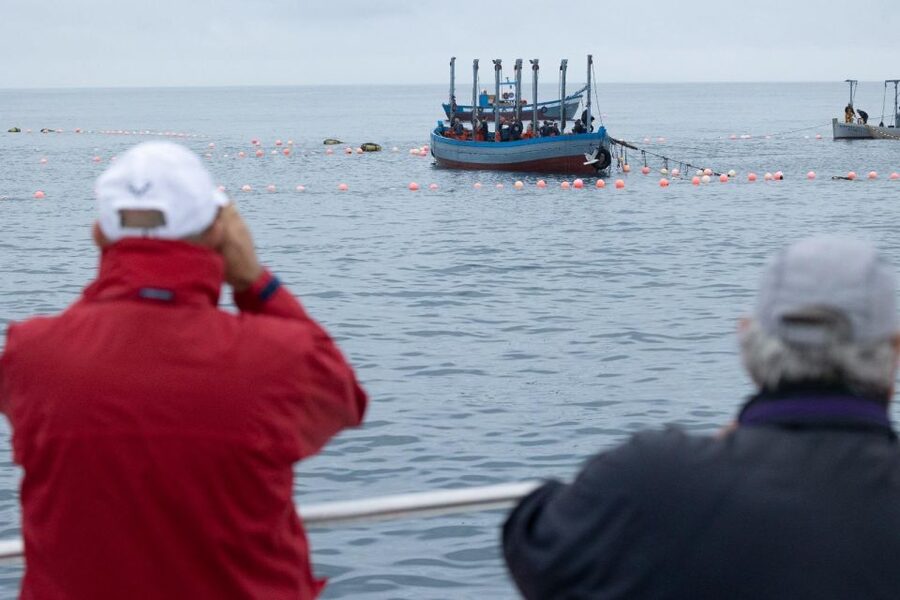
The boat is positioned roughly 100 metres from the codend. That distance is important. You are close enough to see the activity, but far enough away not to interfere with a delicate manoeuvre carried out by the professional fishing crew.
Bring binoculars if you have them. The boat’s position gives you a clear view, but the action is not happening directly alongside your rail. Binoculars can help you follow the boats, the raised net, and the movement near the surface.
Seeing the levantá from offshore
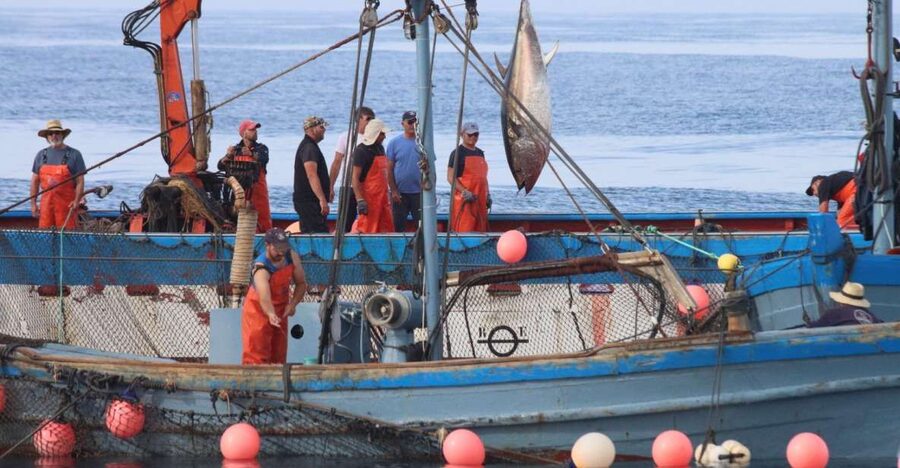
When the currents quiet at the exact change of tide, the fishing operation begins. The boat called the sacada carries the main trap crew. On the captain’s orders, the codend net is raised after divers, known as frogs, signal that the tuna have passed beneath the boat.
This is the key moment. If the net is raised too soon or at the wrong time, the day’s fishing may fail. The crew’s coordination is therefore part of what you are watching. It is not a single dramatic pull, but a carefully timed sequence involving the captain, divers, boats, nets, and currents.
Once the tuna are secured, the codend is pulled and lifted from about 30 metres down. As it rises, the fish begin to move near the surface. The red giants are visible through the agitation of the water, and the scale of the fish becomes easier to grasp than it is from a plate in a restaurant.
The closing boats gather as the sacada approaches. The crew then uses handling methods associated with Japanese tuna fishing, including Lupara and Ikeyime. These methods are described as reducing suffering and protecting the quality of the tuna.
You should set your expectations correctly. This is not a guaranteed wildlife sighting in which every detail is visible for a long time. The position of the boat, the weather, the water, and the fishing conditions all matter. The strength of the experience lies in seeing the full working sequence, even if some parts are easier to follow through the guide’s explanation than with your own eyes.
A small improvement would be clearer instructions before the boat settles into position. It helps to know where the best viewing areas will be and what you are about to see. If the crew explains that early, you can get your bearings quickly instead of moving around the boat looking for a good angle.
A few more fishing trips around Spain worth a look
- World Class Fishing Charter Trip in Tenerife
★ 4.5 · 110 reviews - Adeje: 3.5–Hour Professional Fishing Experience
★ 4.3 · 107 reviews - Fishing Trip all included
★ 4.3 · 77 reviews - Fishing trip, Tenerife Sea Passion
★ 4.5 · 68 reviews
Watching the catch leave for port
After the first boat is loaded with tuna, Marine Atlantes heads back toward Barbate. This return is not an abrupt end to the tour. You wait to see the tuna unloaded in port or onto a factory boat, depending on the operation that day.
The unloading gives you another useful link in the process. You have watched the fish move through the trap, and now you see what happens after the offshore work. The tour does not include cutting up or cleaning the tuna, so anyone hoping for a full demonstration of butchery should know that this is not part of the visit.
That boundary is sensible. The focus remains on the Almadraba and the fishing process rather than turning the catch into a show. You see the unloading, then move on to the food tasting included on board.
Tuna tasting on the way back
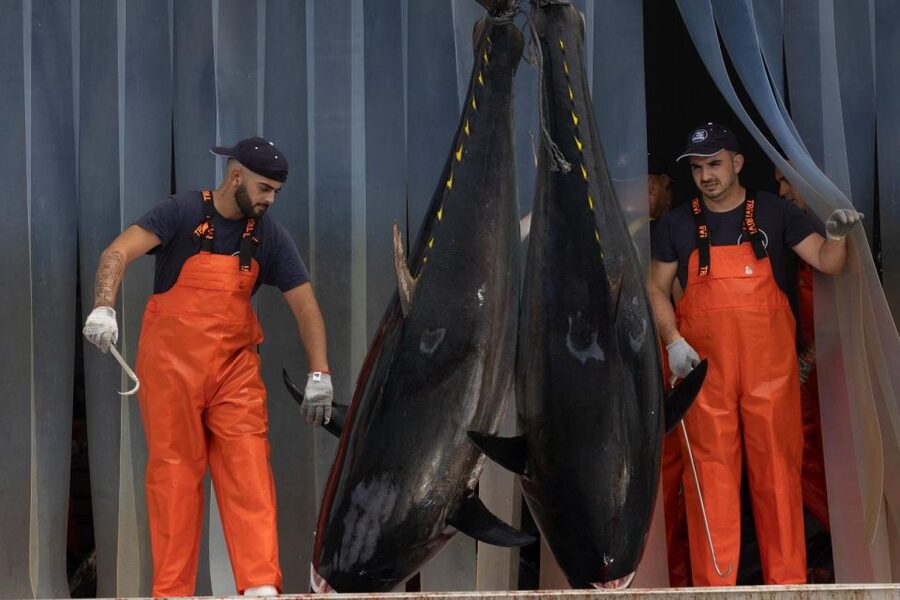
The tasting includes tuna in different varieties, accompanied by drinks. This is a good way to connect the fishing method with the food culture of the Cádiz coast. You are not simply told that bluefin tuna is valuable. You get to taste it in more than one preparation after learning how it was caught.
The tasting is paired with the return journey, while coffee and pastries come on the way out. Together, the two food services help justify the price, though the main value still comes from access to the working Almadraba.
At $225 per person, this is not a cheap boat excursion. You are paying for a specialised trip, access fees connected with the Almadraba, a live guide, transport offshore, food, drinks, and the chance to see an operation that ordinary coastal cruises do not reach.
I would judge the price by your interest rather than by the number of hours alone. If you care about fishing traditions, bluefin tuna, marine food culture, or the mechanics of large net systems, the cost is easier to defend. If you want a relaxed coastal cruise with guaranteed wildlife viewing, this is a poor match.
Timing, weather, and the fishing quota
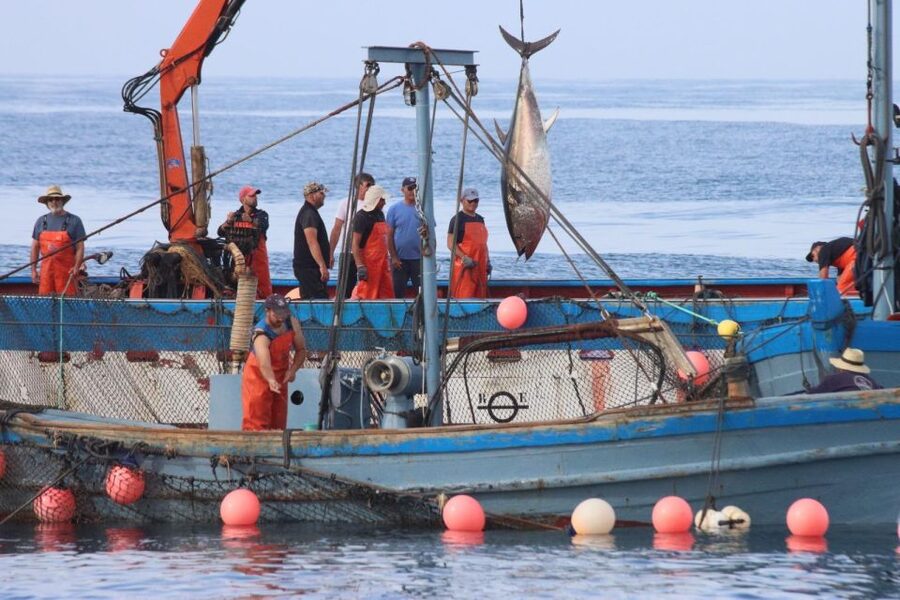
The advertised duration is four hours, but the port schedule also refers to a five-hour activity. Treat the timing as approximate and confirm the departure details when you book. The one-hour crossing each way, the tide-dependent fishing, the unloading, and the tasting all make this longer than a short harbour cruise.
Weather can force a date change. The fishing day also depends on the quota assigned to the Almadraba. Once that quota is reached, the season ends, so booking well ahead is sensible.
I would stay in the Barbate area for two or three days if this tour is a priority. That gives you room to move the outing forward or back by a day if weather interrupts the original plan. A tight schedule makes this a risky choice, especially if you need to leave Andalusia immediately afterward.
The tour offers free cancellation up to 24 hours before departure, and you can reserve now and pay later. Those policies help, but they do not solve the larger issue of limited fishing dates. The quota and sea conditions still control the experience.
Who will enjoy this trip most
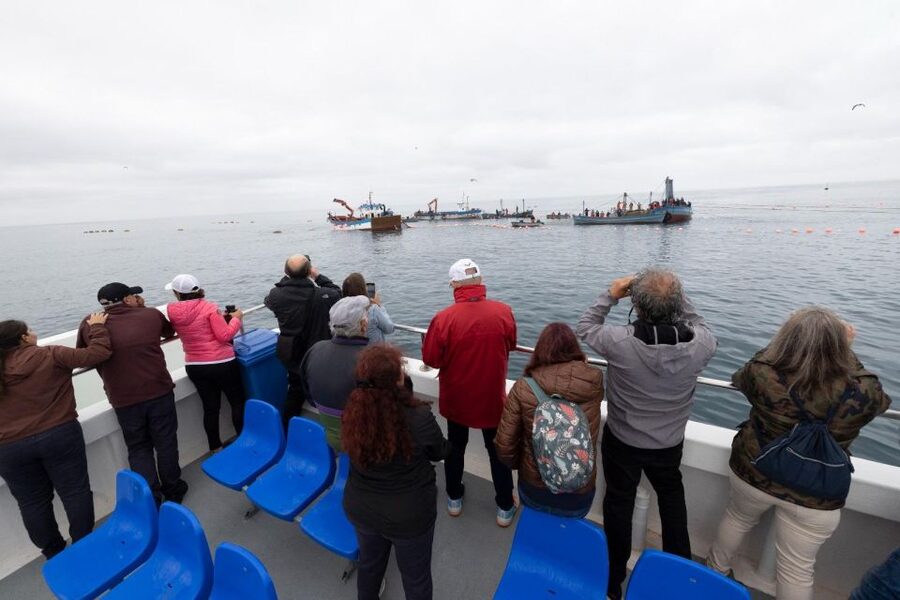
This tour suits you if you prefer working traditions to standard sightseeing. It is especially good for people interested in fishing, regional food, maritime history, and the practical side of how a famous ingredient reaches the table.
It also suits curious families and older children who can manage a few hours on a boat, though the supplied information does not specify age rules or child facilities. Anyone prone to seasickness should prepare carefully.
English and Spanish live guidance is available, with an English audio guide included. That makes the technical explanation easier to follow, especially when the crew is describing several boats and net sections at once.
You should probably skip it if you dislike open-water crossings, need a fixed timetable, or want a quiet scenic ride with no working activity. The fishing may be fascinating, but it is also dependent on weather, tides, quota, and the crew’s operation.
Practical preparation for Barbate Marina
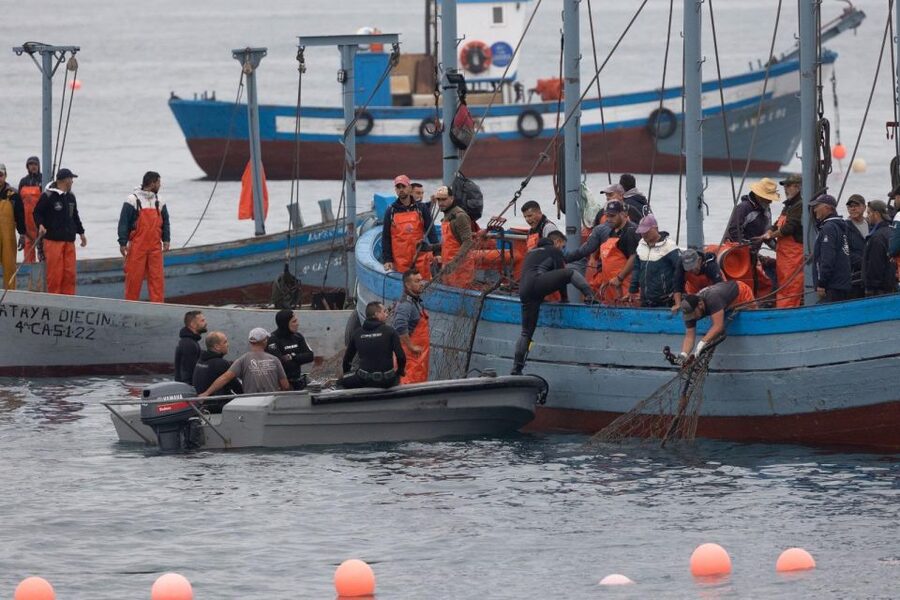
Bring a passport or identity card, as well as a hat, sunscreen, and comfortable clothes. Binoculars are worth packing because the boat stays about 100 metres from the codend.
Pets, weapons, sharp objects, drones, and outside food are not allowed. The tour includes breakfast, tuna tasting, and drinks, so you do not need to bring your own meal.
Try to arrive ready for both sun and wind. The same day can feel warm in the marina and cooler on the Atlantic. The important practical choice is motion-sickness preparation. If the sea is rough, several hours aboard can become the hardest part of the day.
The crew received strong praise for its friendly approach, with particular appreciation for Charo. The operation is run by Marine Atlantes, described as the only company authorised and advised for this activity by the Almadraba group and its tourism subsidiary, Almadraba Tours S.L. That official connection matters because the tour takes place near an active fishing operation where access and positioning must be controlled.
Should you book the Almadraba tour?
Book it if you want to see a centuries-old fishing system working in real conditions, and if you are willing to accept an hour-long crossing, changing weather, and tide-led timing. The combination of clear explanations, close but respectful viewing, unloading, and a tuna tasting makes this one of the more distinctive food and culture outings in the Cádiz area.
Think twice if $225 feels high for a four-hour boat trip or if you are easily seasick. Also avoid placing it on the final day of a tightly scheduled trip. Give yourself spare days in Barbate, book early before the quota ends the season, and bring binoculars and motion-sickness medicine.
For the right visitor, the value is not just the tuna on the plate. It is seeing how the sea, the tide, the fish, and a large human crew must work together before that plate is possible.
FAQ
Where does the Almadraba boat tour begin?
The tour begins at Marine Atlantes in Barbate Marina, at Puerto Deportivo, s/n, 11160 Barbate, Cádiz.
How long does the tour last?
The activity is advertised as four hours. The port schedule also refers to five hours, so you should confirm the exact timing when checking available departures.
What languages are available?
Live guiding is available in Spanish and English. An English audio guide is also included.
What will I see at the Almadraba?
You will learn about the net system, large anchors, tuna migration, fishing techniques, divers, and the codend. You will watch the levantá, when the final net is raised and the tuna are secured, provided conditions allow the fishing operation to proceed.
How close does the boat get to the fishing action?
Marine Atlantes positions its boat about 100 metres from the codend so it does not interfere with the fishing manoeuvre.
Is food included?
Yes. Breakfast with coffee and pastries is served on the way out. On the return journey, you receive a tasting of tuna in different varieties with drinks.
What should I bring?
Bring a passport or identity card, sun hat, sunscreen, comfortable clothes, and binoculars. Motion-sickness medicine may also be useful if the sea is moving.
Can weather or fishing conditions change the date?
Yes. Dates may change because of weather, and the season can end when the Almadraba’s fishing quota is reached. Staying in the destination for two or three days gives you more flexibility.
Just added around Spain
- TUNA FISHING TRIPS IN FUENGIROLA★ 4.3 · 5 reviews
- Fishing trip Torrevieja★ 4.5 · 14 reviews
- Best Fishing experience in Tenerife island★ 4.5 · 6 reviews
- Fishing Trips in Mallorca with Captain Martin★ 3.0 · 6 reviews
- 4 Hours Bottom Fishing Day by boat from Marbella★ 5.0 · 23 reviews
- Macaronesia Charter Fishing in Lanzarote (Canary Islands)★ 5.0 · 17 reviews
- Electric Bike Panoramic South Coast Tour Optional Fishing Tapas★ 4.5 · 5 reviews
- Boat and fishing trips in the Cadiz bay★ 5.0 · 19 reviews
Spain Fishing Trips, compared.
Adeje: 3.5–Hour Professional Fishing Experience
Read our review →
Hiking Cliffs & Old Fishing Trails around Moraira OFFICIAL GUIDE
Read our review →
Browse the lists this tour appears in