
REVIEW · DEEP SEA FISHING
DEEP SEA FISHING 1/2 day (private group)
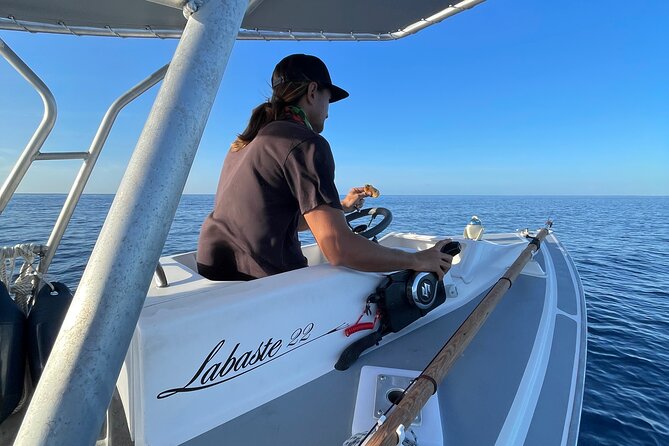
Tahiti’s Poti Marara fishing boat was built for flying-fish fishing, yet it now handles trolling, popping, jigging, and the traditional Poito method. That gives you more than a basic boat ride. You get a small, private fishing trip shaped by local ocean knowledge, with the chance to look for mahimahis, bonites, red tuna, and marlins.
I like the private group format, which keeps the outing personal for up to four people, and I like that the crew supplies serious equipment, including two 130-pound rods, lures, bait, and safety gear. The main caution is that fishing is never guaranteed. One poor outing involved a small boat, only one line in the water, warm water, and little action, so it is worth confirming the day’s plan and captain before departure.
Key points at a glance
- Traditional Poti Marara boat: A Tahitian fishing boat originally designed for catching flying fish.
- Four hours on the water: The trip searches around Tahiti for mahimahi, bonite, red tuna, and marlin.
- Private group of up to four: You share the boat only with your own party.
- Heavy fishing equipment included: Two 130-pound rods, lures, bait, and safety equipment are supplied.
- Local crew and methods: The team uses trolling, popping, jigging, and the Poito technique.
- Mountain views and a local snack: The ocean trip includes views of Tahiti’s mountains and food made with local products.
A four-hour fishing trip built around Tahiti’s ocean
This is not a sightseeing cruise with fishing added as a small extra. The main purpose is to search for fish in the ocean around Tahiti, while the island’s mountains form the backdrop.
Your trip begins at Poissonnerie Happy Tuna in Arue. The listed activity ends back at this same meeting point. Pickup is offered, but you should confirm the exact pickup arrangement when you book, since the stated starting point is the fish market in Arue.
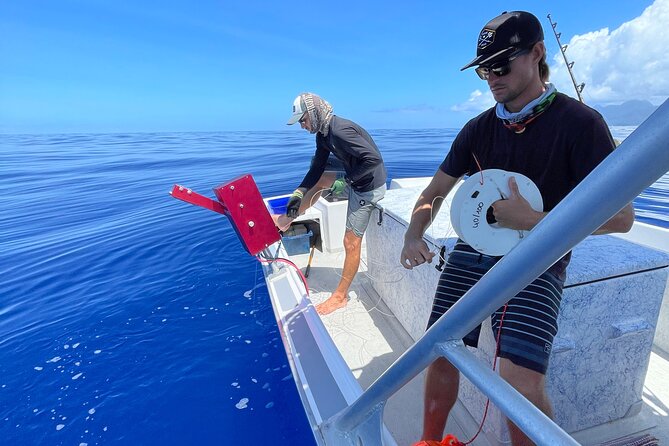
Once aboard, the crew sets up the rods and selects a fishing method suited to the conditions. The boat may use trolling, popping, jigging, bait, or the traditional Poito approach. The exact pattern depends on the sea and the fish, so you should think of this as a real fishing outing rather than a fixed sightseeing route.
That uncertainty is part of the appeal. You are not being taken to a staged attraction with a guaranteed result. You are spending four hours looking for schools of fish in their natural setting. It also means you need to be comfortable with quiet stretches and changing plans.
More Deep Sea Fishing Trips in the world:
- Half-Day Deep-Sea Fishing at Riviera Beach
★ 4.5 · 366 reviews - Shared Sportfishing Trip from Fort Lauderdale
★ 5.0 · 340 reviews - Fort Lauderdale: 4-Hour Deep Sea Drift Fishing Trip
★ 4.3 · 297 reviews
Why the Poti Marara matters
The boat itself gives this outing a distinct Tahitian character. The Poti Marara was originally designed for flying-fish fishing, and the word Marara refers to flying fish in Tahitian. Its continued use for several fishing styles makes it a practical local craft, not simply a tourist boat chosen for appearance.
The supplied information does not give the boat’s exact size or cabin arrangement. One unhappy customer described the boat as small, so you should expect a close, open-water setup rather than a large vessel with lots of indoor space. For a private group of four, that can feel friendly and direct. If you prefer a roomy boat with plenty of space to move around, ask for details before paying.
The crew’s local background is another important part of the outing. The team has grown up around the ocean and uses both modern and traditional methods. Captain Vehiatua is identified as the owner and main captain of Tahiti Ocean Adventures. A second captain may also operate the boat, so confirm who will lead your trip if that matters to you.
The fishing methods you may try
The crew supplies two large 130-pound rods, along with lures and bait. That equipment is intended for serious offshore fish, not a casual handline near shore.
Trolling usually keeps lures or bait moving behind the boat as the boat travels. It is a useful way to cover water while searching for fish. You may spend some of the trip watching the lines and waiting for a strike rather than casting constantly.
Popping uses a surface lure that is worked across the water. It can be active and physical, though the provided information does not promise that this method will be used on every outing.
Jigging works a lure through the water at different depths. It gives you something more hands-on to do when the fish are not taking surface lures.
The crew also knows the traditional Poito technique. The description does not explain the exact equipment or sequence used for Poito, so ask the captain to show you how it works. That short explanation can add real local character to the trip, especially if you have already fished with standard rods elsewhere.
The various methods are valuable because no single approach works in every condition. The crew can adjust its plan instead of relying on one type of line. Still, changing methods cannot force fish to bite. Your catch depends on weather, water conditions, fish movement, and luck.
What you may catch around Tahiti
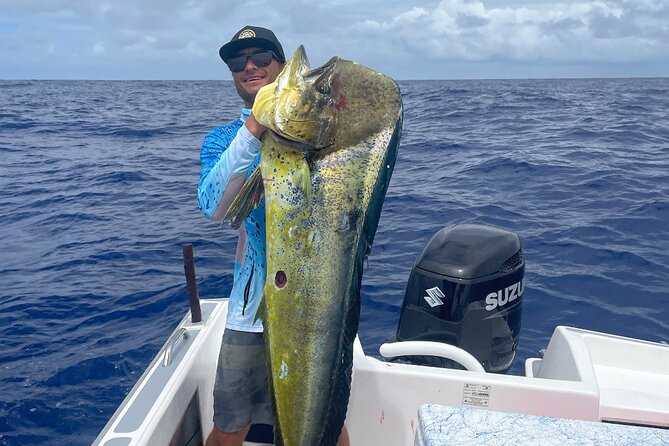
The target list includes mahimahis, bonites, red tuna, and marlins. These are not small reef fish. The two 130-pound rods make sense for the size and strength of the fish the crew hopes to find.
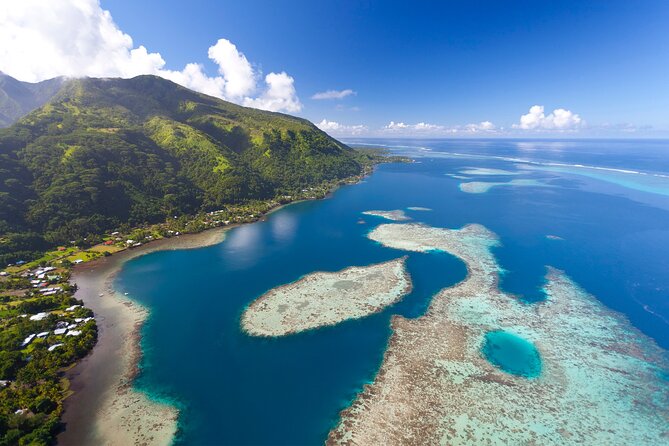
A successful catch would be the clear highlight, but the scenery matters during the waiting periods. You will have views toward the mountains bordering Tahiti, with the island appearing from the ocean rather than from a road or town. That perspective helps make the trip feel tied to the island itself.
You should keep expectations realistic. One poor outing produced only two small fish after several hours, and the customer described the day as mostly riding around with only one line out. The captain’s response explained that the group had become uncomfortable after leaving the pass, which affected the plan. This is useful information for you: tell the crew early if you are uneasy, and ask how far offshore the trip is expected to go.
A fishing trip is a better choice for someone who enjoys the process, not only the result. If catching a large fish is your sole reason for booking, you may find the price hard to justify on a slow day.
A few more fishing trips around the world worth a look
- 1/2 Day 5 Hour Offshore Fishing Charter
★ 4.5 · 41 reviews - Private Deep Sea Fishing 1/2 Day morning on”Angler Management”
★ 5.0 · 37 reviews - 1/2 Day Fairbanks Fishing Trip W/ transportation
★ 5.0 · 18 reviews - 1/2 Day Morning Charter Fishing Naples Marco Everglades Sanibel
★ 5.0 · 12 reviews
A private boat can be a real advantage
The price is $910.98 for the group, with up to four people included. Split four ways, that works out to about $228 per person. For two people, the cost is much higher per person, but you still receive a private outing rather than a seat on a shared boat.
This format suits families, couples who fish together, or a small group of friends who want the boat to themselves. You can ask questions without competing with a large crowd, and the crew can focus on your group’s ability and interests.
Private also means you share responsibility for the atmosphere. If one person is nervous about open water, that concern can shape the whole outing. Talk about the route, fishing methods, and comfort level before leaving the meeting point.
The 4.7 rating from 18 ratings and a 94 percent recommendation rate suggest that the general experience works well for most customers. The sample size is small, though, and the poor account shows why clear expectations matter. Ask how many lines will be used, what happens if someone feels uncomfortable offshore, and which captain is scheduled.
The local snack is a small but useful touch
A snack made from local products is included during the trip. It is intended to keep your energy up during four hours at sea, especially if you are casting, jigging, or handling a strong fish.
The food is described only as a local snack, so do not assume it replaces breakfast or lunch. Bring any food or drink you personally need, unless the operator confirms otherwise. One customer complained that the only water provided was a large bottle that was already open and warm. That is a serious practical warning, even though it may not represent every departure.
I would confirm the drinking-water setup before you go. You should also ask whether the snack suits your dietary needs. Those are simple questions, but they matter on a four-hour boat trip where shops are not nearby.
Comfort, weather, and physical effort
You need a moderate level of physical fitness. Fishing from a small boat can involve standing, holding a rod, working a lure, and keeping your balance. The supplied safety equipment is reassuring, but it does not remove the physical demands of the sea.
The activity requires good weather. If conditions force a cancellation, you can choose another date or receive a full refund. The free cancellation rule also allows a full refund when you cancel at least 24 hours before the start time. Changes or cancellations made within 24 hours are not accepted for a refund.
The information does not specify a cabin, toilet, shade, meal, or type of seating. Do not assume these are included. Ask before departure, especially if anyone in your group has motion sensitivity or needs regular access to facilities.
The pass mentioned in the captain’s response is also worth noting. Leaving the pass may put you into rougher or more exposed water, and not every person will enjoy that. If you are unsure about open water, say so before the boat heads out. A calm conversation at the start is better than an uncomfortable afternoon offshore.
Who will get the most from this outing
I would choose this trip if you enjoy fishing as an activity, want a private boat, and like the idea of learning local methods from Tahitian crew. It is also a good match if you want mountain views but do not want a large group excursion.
Experienced fishers may appreciate the range of methods and the heavy rods. Beginners are welcome too, since the crew works with people who have different levels of ability. You should be ready to listen, follow instructions, and accept that the crew may change tactics.
This is less suitable if you need a guaranteed catch, dislike small boats, or want a relaxed cruise with little physical effort. It may also be poor value for one person or a couple if you are not strongly interested in fishing, since the full group price is still charged.
The best value comes when four people who genuinely enjoy fishing share the cost. At that point, the private setting, four-hour duration, equipment, and local crew make the price easier to defend.
Practical questions to ask before departure
I would confirm four things before meeting the boat. First, ask whether Captain Vehiatua or the second captain will lead the trip. Second, ask how many lines are normally placed in the water and which methods are likely for that day.
Third, ask about drinking water, the local snack, and any food restrictions. The snack is included, but the details are not given, and one customer had an unpleasant water problem.
Fourth, ask how the plan changes if someone is uncomfortable after leaving the pass. This is not about being difficult. It helps the crew plan a safer and more enjoyable outing for everyone.
The meeting point is Poissonnerie Happy Tuna, FFG9+73Q, Arue, French Polynesia. The activity returns there at the end. Confirmation is issued within 48 hours, subject to availability, and the average booking time is 78 days ahead, so reserve early if your Tahiti dates are fixed.
Should you book this Tahiti fishing trip?
Book it if you want a private, locally run fishing trip and you will enjoy the hours spent searching even if the fish do not cooperate. The traditional Poti Marara, several fishing methods, heavy tackle, mountain views, and a small group make this more distinctive than a standard boat ride.
I would be cautious if your priority is a guaranteed marlin, a large luxury boat, or generous onboard refreshments. Confirm the captain, fishing plan, water supply, and offshore conditions before you go.
For a group of four anglers, this is a reasonable way to spend half a day on Tahiti’s ocean. For anyone who sees fishing as only a means to an impressive photograph, the cost and uncertainty may not suit you.
FAQ
Where does the fishing trip start?
It starts at Poissonnerie Happy Tuna, FFG9+73Q, in Arue, French Polynesia.
Where does the activity finish?
The trip ends back at the same meeting point.
How long does the fishing trip last?
The activity lasts approximately four hours.
How many people can join the private trip?
The private group can include up to four people.
What fish might I catch?
The crew searches for mahimahis, bonites, red tuna, and marlins.
Is fishing equipment provided?
Yes. The equipment includes two 130-pound rods, lures, bait, and safety equipment.
Is food included?
A snack prepared from local products is included.
What happens if bad weather cancels the trip?
You will be offered another date or a full refund if poor weather causes the cancellation.
Just added around the world
- ZANZIBAR FISHING EXPRIENCE★ 3.3 · 6 reviews
- Zanzibar Sea Fishing Boat Tour experience with Transfer★ 3.8 · 16 reviews
- Zadar: Fishing Boat Trip with Lunch and Swimming Included★ 5.0 · 9 reviews
- Zante Fishing Tours★ 5.0 · 7 reviews
- Wonga Beach: Hook-A-Barra Fishing Experience★ 4.7 · 16 reviews
- Ylläs: Snowmobile Adventure with Ice Fishing★ 4.7 · 18 reviews
- Wonga: Guided Fishing, Farming and Tasting Tour★ 5.0 · 2 reviews
- Wismar: Harbor Cruise with Sea Animal Fishing and Guide★ 4.6 · 22 reviews
Deep Sea Fishing, compared.
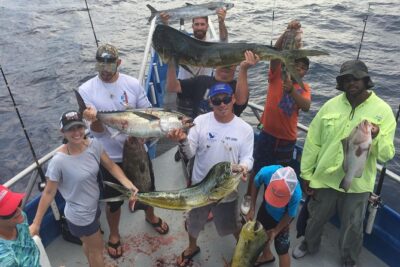
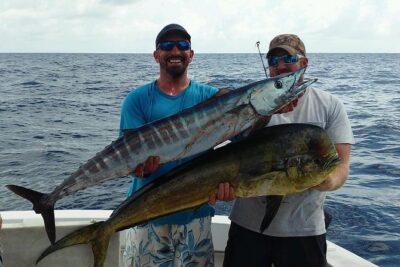
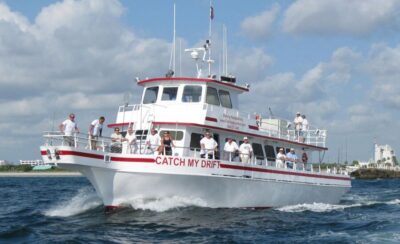
Fort Lauderdale: 4-Hour Deep Sea Drift Fishing Trip
Read our review →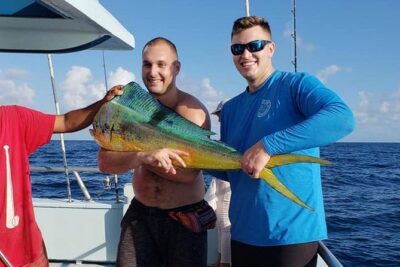
Miami Half Day Deep Sea Fishing Trip from Bayside Marketplace
Read our review →
Out n About Sportfishing for Share and Private Charters on Reef and Estuary
Read our review →
Browse the lists this tour appears in