
REVIEW · AUSTRALIA FISHING TRIPS
Hook-A-Barra Fishing and Farm Activity
The big draw here is simple: you get to follow barramundi from farm pond to fishing line to plate in one compact outing. At the Daintree Saltwater Barramundi Farm, you’ll see young fish, help check their condition, watch a hand-harvest, then try to catch one yourself.
I like the mix of useful farm insight and old-fashioned fishing fun. I also like the small maximum group of eight, which gives the guides room to help with casting and landing a strong fish. The main consideration is that catching a barra is never fully guaranteed, even in a stocked pond, so come ready to enjoy the whole visit rather than chase only a trophy.
Key points
- Feed young barramundi: See the baby barra ponds and learn how the fish are raised for the restaurant trade.
- Watch a working harvest: The farm team demonstrates hand-harvesting and explains how fish are checked for health and weight.
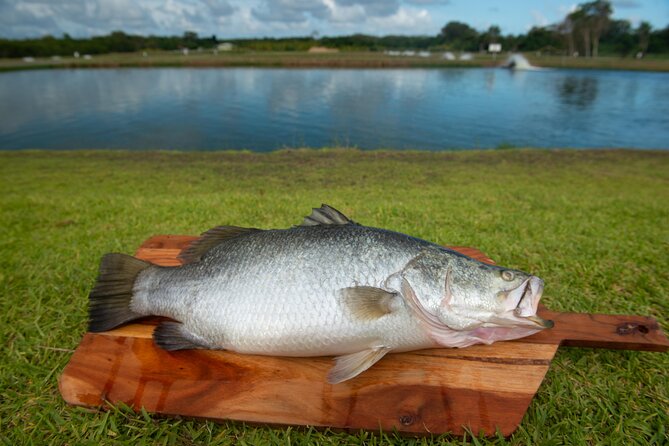
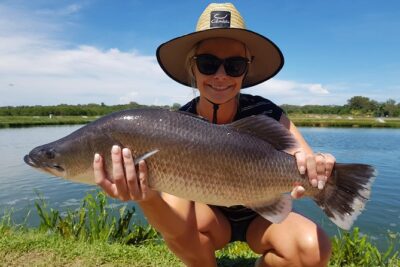
- Fish in the big Barra Pond: Staff help you try for a hard-fighting barramundi, with fish reported at sizes up to 120 centimetres.
- Taste the catch in three styles: The gourmet platter gives you a pond-to-plate look at barramundi as food.
- Small group setting: The tour has a maximum of eight people, useful when you need hands-on help.
- Easy half-day timing: It begins at 9:00 a.m., lasts about two and a half hours, and returns to the starting point.
Why this Daintree barra experience works
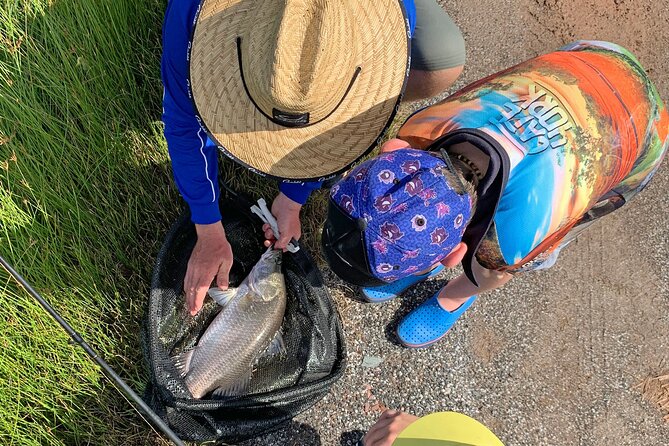
Many farm tours ask you to look through a fence and listen to a short talk. Hook-A-Barra gives you more to do. You feed fish, see the working ponds, watch a harvest, handle fishing gear, and sit down to taste the final product.
That range makes the experience useful for a family group, a couple with different interests, or anyone curious about aquaculture in Queensland. You do not need to choose between a food experience and an activity. This one joins the two.
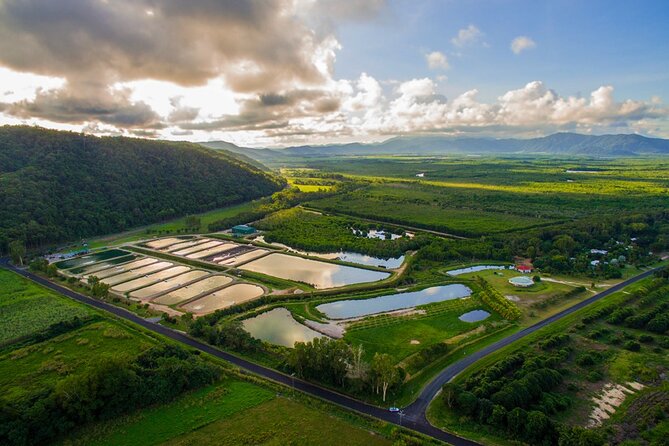
The setting is the Daintree Saltwater Barramundi Farm at Wonga Beach, with the meeting point at Hook-A-Barralot, 3 Vixies Road. The tour starts and finishes there, so you should plan to arrive ready for a 9:00 a.m. start. The supplied details do not include transport, so you need to make your own way to the meeting point.
At $78.90 per person, this is not the cheapest short activity in Queensland. I think the price makes better sense when you count the full package: a guided farm visit, direct contact with the fish, fishing instruction, and a gourmet tasting. A short fishing session alone would offer less context, while a standard farm tour would miss the excitement of landing a barra.
More Farm Visits in Australia:
- Wonga: Guided Fishing, Farming and Tasting Tour
★ 5.0 · 2 reviews - Hoi An Farming And Fishing Life
★ 5.0 · 45 reviews - Small Group Bicycle Tour with Farming and Fishing Experience
★ 5.0 · 31 reviews
The one-hour farm tour, from baby barra to harvest
The first hour takes you behind the scenes of the farm. You begin at the front gate and move through the baby barramundi ponds and growing ponds, seeing how the fish progress through the operation.
The young fish are a useful part of the visit because they give you a clear sense of scale. Barramundi served in a restaurant starts as a small fish that needs careful feeding, monitoring, and handling. You get to feed the barra and help check their weight and health, rather than simply hearing that the farm looks after its stock.
The staff also explain how the operation supplies high-quality produce to restaurants around Australia. That matters because it gives the farm a purpose beyond recreation. You can see how food production, fish care, and the final meal connect.
Expect the information to be practical rather than academic. The strongest part of this tour is the chance to ask questions while standing beside the ponds. Lee has led guests through the farm with clear knowledge of the operation and obvious care for the work, while Luke has also guided the experience with a friendly, informative approach.
A working farm is not a polished theme-park attraction, and that is part of its value. You are seeing a real production process, with attention on the fish and the people who raise them. If you want a highly theatrical show, this may feel straightforward. If you like seeing how food is produced, it offers useful detail in a short time.
Hand-harvesting shows the fish at work
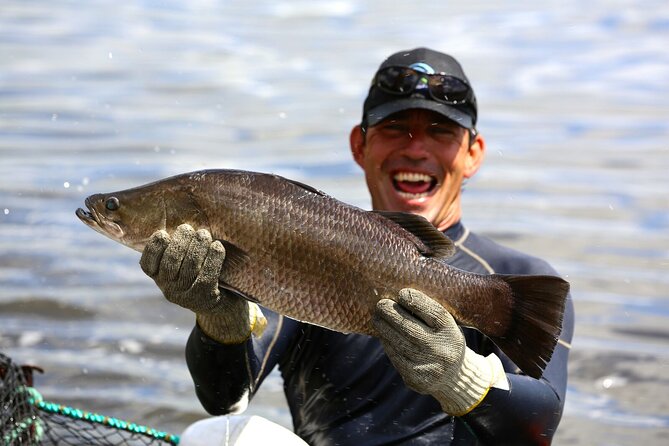
One of the more unusual moments is the hand-harvesting demonstration. Experienced staff bring barramundi out of the ponds and show you the process up close.
This helps explain why the fish need careful handling. Barramundi are strong, active fish, and the same qualities that make one exciting to catch also make it important to monitor its condition during farm operations. You see the difference between a fish prepared for market and one still growing in the pond.
The harvest also gives the tour a direct connection to the tasting platter later on. You are not simply discussing a product in abstract terms. The day follows a clear path from living fish to prepared food, which makes the final meal more meaningful.
The farm section takes about an hour, so it does not swallow the whole morning. That balance is important. You receive enough information to understand the operation, but you still have time for the fishing portion, which is likely to be the main event for many people.
Fishing the big Barra Pond
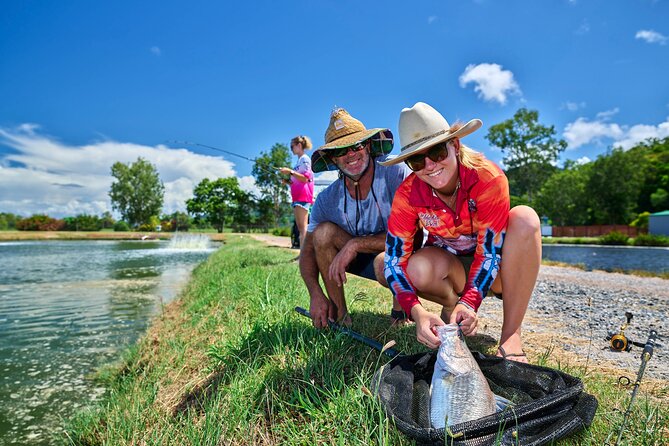
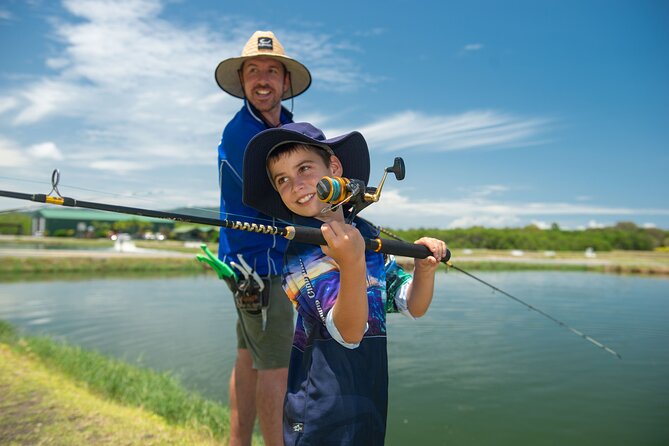
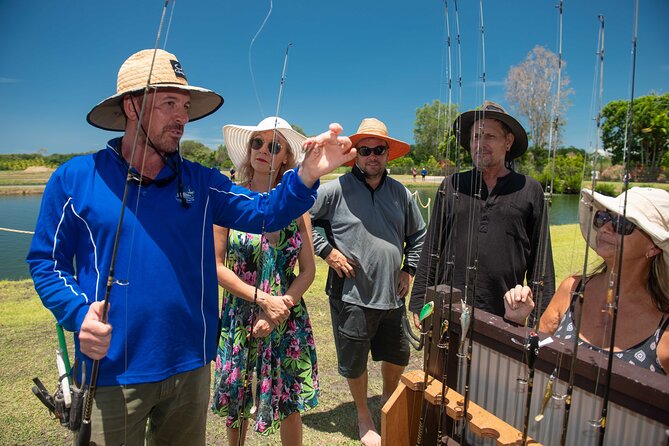
After the farm tour, you head to the big Barra Pond and try to catch your own barramundi. The guides stay with you and offer tips on how to land the fish, which is especially useful if you have little fishing experience.
Gaz has been praised for patience and practical instruction, while Flynn brings a friendly, funny manner to the fishing session. The guide’s role matters here. A strong barra can make an ordinary cast feel like a real contest, and calm help is welcome when the fish starts fighting.
The fish vary in size. Some catches have been around 25 centimetres, while others have reached 80, 95, or more. Barramundi in the pond can grow beyond 120 centimetres, so there is genuine potential for a memorable catch, though you should not treat the largest size as a promise.
One useful expectation is that fishing results can be uneven. Some people get a strike within five minutes. Others see fish get away, or catch a smaller barra than the person standing beside them. That is normal fishing, even in a stocked pond. The guides can improve your technique and give you a fair chance, but they cannot control every bite.
I like that the fishing is not presented as a silent wait. The crew helps you understand what to do, encourages you through the fight, and focuses on helping you land your first or biggest barra. You get a better experience if you accept the teaching, rather than treating the session as a competition.
The group limit of eight is a real advantage. With only a few people sharing the activity, the guide has more time to watch your technique and assist when a fish is hooked. A larger crowd could make the pond feel less personal, so this cap supports the hands-on nature of the experience.
A few more fishing trips around Australia worth a look
- Hook A Barra Fishing Experience
★ 5.0 · 283 reviews - Out n About Sportfishing for Share and Private Charters on Reef and Estuary
★ 4.5 · 203 reviews - Cairns Estuary Fishing
★ 4.5 · 121 reviews - 4H Snorkeling and Fishing Cruise on Magnetic Island
★ 5.0 · 53 reviews
The gourmet platter completes the pond-to-plate story
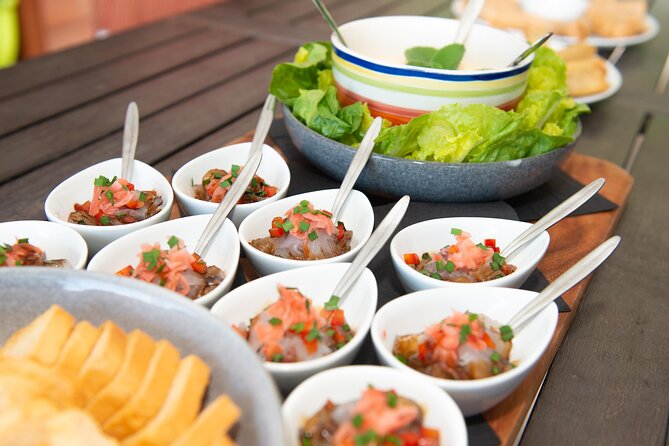
The final tasting brings barramundi back to the table. You sample the fish prepared three different ways on a gourmet grazing platter.
This is more than a snack at the end. It lets you compare preparation styles and see why barramundi is popular as a restaurant fish. The tasting also gives non-anglers a strong reason to join, since the food portion balances the active fishing portion.
The platter has received especially strong praise for flavor and presentation. You should expect a tasting rather than a full restaurant meal, so anyone arriving very hungry may want to plan accordingly. The supplied details do not state whether additional menu items are included in the tour price.
The farm’s Barra Kitchen is open daily from 10:00 a.m. to 3:00 p.m., according to the operator’s response to one booking. That is useful if you want more food beyond the included platter, though the tour details do not specify what extra dishes are available or whether the kitchen schedule affects your particular visit.
I find the food portion valuable because it gives the day a proper finish. You have seen the fish raised, watched one handled by the farm team, and tried to catch one. Tasting it in several preparations completes the story without needing a long lecture.
Who will enjoy the two-and-a-half-hour format
This is a good choice for families, especially if you have children who need a mix of movement and activity. One young participant reportedly had a particularly memorable time fishing, and the staff’s patient approach suits beginners as well as more confident anglers.
It also works well for couples. One of you can enjoy the food and farm side while the other focuses on the fishing. The small group helps keep the outing social without turning it into a crowded attraction.
Fishing enthusiasts may appreciate the chance to chase a large barra without committing to a full-day charter. The pond gives you access to powerful fish in a controlled setting, and the guide can offer direct help. Still, serious anglers should know that this is a guided farm activity, not a wilderness fishing expedition.
The experience suits older visitors who enjoy learning about food production, too. Most people can participate, and service animals are allowed. The information does not list detailed physical requirements, so if you have specific mobility or access needs, confirm them before booking.
The two-and-a-half-hour length is one of its strengths. It is long enough to feel substantial but short enough to fit alongside other plans in Queensland. Because the tour starts at 9:00 a.m., you still have much of the day available afterward.
What the small group changes
A maximum of eight people keeps the activity personal. You are less likely to spend the entire fishing period waiting while someone else receives all the help, and questions during the farm visit should be easier to manage.
The group size also affects the social feel. You may be sharing the outing with a family, a couple, or a few friends, rather than a large busload. That can make the fishing more relaxed, though it also means the pace may be shaped by the other people in your group.
The guides appear to be a major part of the experience. Lee and Luke bring different strengths to the farm side, while Gaz and Flynn have been singled out for their patient or good-humored fishing instruction. Staff attention is especially useful when you are learning how to handle a barra that fights harder than expected.
If you are booking for a group of four, this is a practical size. A party of four can share the farm and pond experience without filling the entire maximum. Larger groups should remember that the total cap is eight, not an unlimited private outing.
Price, booking time, and practical planning
The cost is $78.90 per person. I would judge that as fair if you want a bundled experience with education, fishing, and food. It is less compelling if you only want to cast a line for a few minutes, since the farm tour and tasting are a large part of what you are paying for.
The activity is commonly booked about 17 days ahead. That is a useful planning clue, especially if you have fixed dates in Queensland. The small group limit means there are fewer places per departure, so leaving it until the last moment may not be wise.
You receive a mobile ticket, and confirmation is provided at booking. The tour begins at 3 Vixies Road, Wonga Beach, at 9:00 a.m., then ends back at that same meeting point after about two and a half hours.
Cancellation is flexible if you act early. You can cancel at least 24 hours before the local start time for a full refund. Cancellations or changes made within 24 hours are not accepted for a refund, so check your plans before that cut-off.
The main strengths and limits
The strongest feature is the complete sequence. You do not just see a pond or eat a fish. You learn about farming, take part in feeding and health checks, see a harvest, fish for yourself, and taste barramundi in several forms.
The staff are another clear strength. Luke, Lee, Gaz, and Flynn are associated with different parts of the experience, and their friendly instruction matters when the activity is hands-on. A good guide can turn a missed catch into a useful lesson instead of a frustrating morning.
The main limit is the uncertainty built into fishing. You might catch a large barra quickly, or you might land a smaller fish, lose one, or spend longer waiting. The operator has sometimes allowed extra fishing time during a quieter period, but you should not count on an extended session.
The tour also has a specific focus. If you are looking for a broad Daintree nature outing, this is not that. It is centered on barramundi farming and fishing, with a tasting at the end. That focus is a strength for the right person and a limitation for anyone wanting a wider regional tour.
Should you book Hook-A-Barra?
Book it if you want a short, active Queensland experience that connects food production with fishing. It is particularly worthwhile for families, first-time anglers, couples with mixed interests, and anyone curious about how barramundi reaches the plate.
I would also recommend it to anyone who likes a clear sense of place and purpose. This is a working farm visit, not just a staged photo stop, and the chance to catch a fish up to serious size gives the morning some real suspense.
Think twice if you dislike uncertainty, want a guaranteed trophy catch, or prefer a quiet tasting without an activity. The best way to approach Hook-A-Barra is to value the whole route, from baby fish to growing ponds, harvest, casting, and platter. If you do, $78.90 buys a well-shaped half-day rather than a single short attraction.
FAQ
Where does the Hook-A-Barra experience begin?
It begins at Hook-A-Barralot, 3 Vixies Road, Wonga Beach, Queensland 4873, Australia.
What time does the tour start?
The tour starts at 9:00 a.m.
How long does the experience last?
It lasts approximately two hours and 30 minutes.
Where does the experience finish?
It finishes back at the original meeting point.
How many people can join the tour?
The maximum group size is eight people.
What does the farm tour include?
You visit the baby barra ponds and growing ponds, feed barramundi, help check their weight and health, and watch the team hand-harvest fish.
Is food included?
Yes. The experience includes a gourmet tasting platter with barramundi prepared three different ways.
What is the cancellation policy?
You can cancel at least 24 hours before the local start time for a full refund. Cancellations or changes made less than 24 hours before the start time are not refunded or accepted.
Just added around Australia
- Wonga: Guided Fishing, Farming and Tasting Tour★ 5.0 · 2 reviews
- Wonga Beach: Hook-A-Barra Fishing Experience★ 4.7 · 16 reviews
- Half-Day Deep Sea Fishing in Wollongong – Weekdays only★ 5.0 · 4 reviews
- 3/4 Day 7 Hour Offshore Fishing Charter★ 5.0 · 7 reviews
- Full Day 9 Hour Offshore Fishing Charter★ 5.0 · 8 reviews
- Freshwater or Saltwater Barramundi Fishing Day Trip from Darwin★ 4.5 · 7 reviews
- Sydney: Onshore Fishing Experience with Equipment★ 3.3 · 2 reviews
- Sunshine Coast: Fishing Charters★ 5.0 · 2 reviews
Australia Fishing Trips, compared.
Out n About Sportfishing for Share and Private Charters on Reef and Estuary
Read our review →
4H Snorkeling and Fishing Cruise on Magnetic Island
Read our review →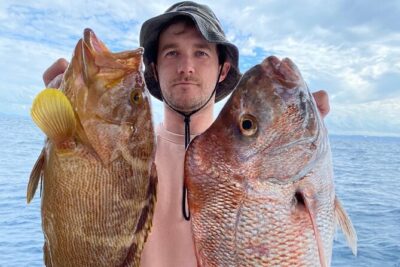
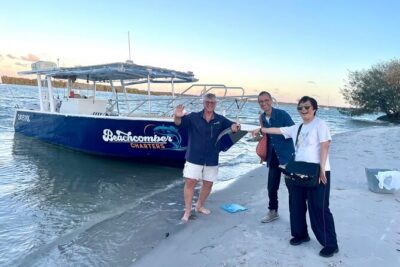
Gold Coast’s Broadwater Private Calm Water Fishing
Read our review →
From Port Douglas: Barramundi Pond Fishing with Lunch
Read our review →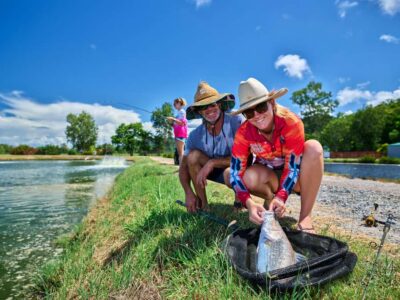
Browse the lists this tour appears in