
REVIEW · ITALY FISHING TRIPS
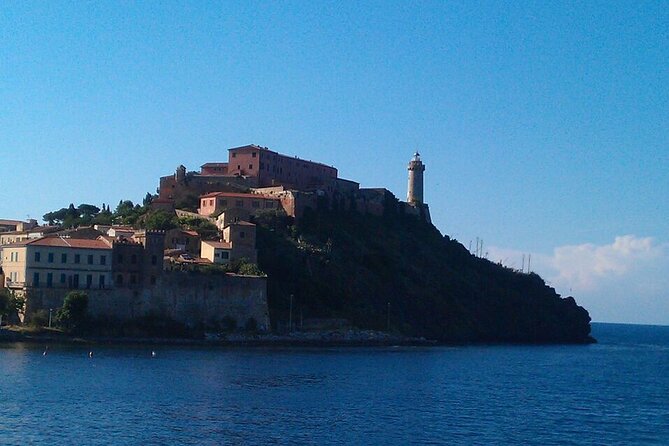
Portoferraio, the fisherman village chosen by Etruscans, Medici and Napoleon
Portoferraio’s story is unusually concentrated: Etruscan roots, Medici military planning, and Napoleon’s brief imperial court all occupy this small Elban harbor town. In about three hours, you walk through the forts, a church-turned-theater, and Napoleon’s main residence while an art historian explains how the town changed under each ruler.
I like the private format, since your group can ask questions without competing with a crowd. I also like the chance to see Portoferraio through art and architecture, not just as a ferry stop, with the walls, towers, and coastline providing a memorable setting.
The main consideration is physical: this is a walking tour, and the guide does not provide entrance tickets. At $360.48 for up to 10 people, it can be good value for a full group, but expensive for one or two people once admission fees are added.
Key points to know before booking
- Three layers of Portoferraio’s past: The tour connects the town’s Etruscan beginnings with Medici fortifications and Napoleon’s exile.
- Private English-language guiding: Only your group participates, with an art historian guide such as Lucille, whose work received especially warm praise.
- A fort, theater, and imperial residence: The route includes one of the city’s three Medici forts, the former Carmine church, and Napoleon’s principal residence.
- Three hours on foot: Wear practical shoes and be ready for a moderate level of walking.
- Good value for a larger group: The $360.48 price covers up to 10 people, not each person individually.
- Tickets cost extra: Admission fees are not included, so check the total cost before you commit.
Portoferraio in three powerful chapters
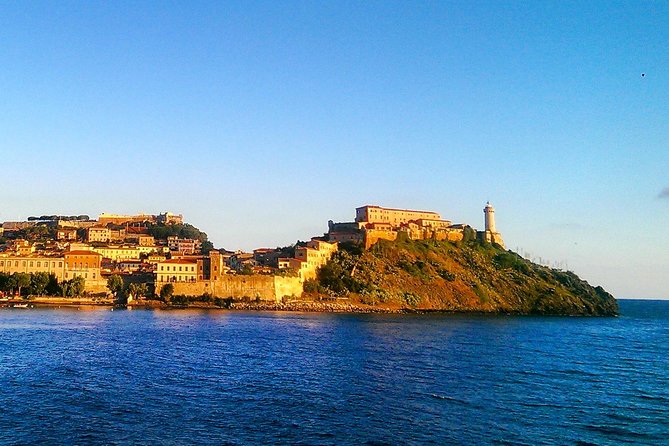
Portoferraio is not simply a pretty port on Isola d’Elba. Its identity was shaped by several very different powers. The Etruscans first recognized the value of the site, the Medici built a fortified city in 1548, and Napoleon later used the island as the center of his first exile.
That makes this tour a good choice if you like places where political history is visible in stone. You are not moving between unrelated sights. The forts explain the Medici city, the theater shows how Napoleon reshaped public life, and the residence brings the exile story closer to everyday scale.
The three-hour format gives you enough time for context without taking an entire day from your island visit. I would think of it as a focused introduction to Portoferraio, especially useful if you have arrived by ferry and want to understand the town before exploring on your own.
A few more fishing trips around Italy worth a look
- Fishing and Tourism in Capri
★ 5.0 · 328 reviews - Boat fishing, boat tours, boat party
★ 4.5 · 65 reviews - Fishing, Snorkelling & Dolphin Boat Tour
★ 5.0 · 56 reviews
Starting at Via Vittorio Emanuele II
The meeting point is at Via Vittorio Emanuele II, 16, in Portoferraio. The tour ends back at the same meeting point, which makes planning easier if you have other activities scheduled afterward.
You can choose a morning or afternoon start. That flexibility matters on Elba, where a port day may include ferry connections, beach time, meals, and independent sightseeing. If you want the tour to shape your first impression of town, choose the morning. If you prefer to arrive, settle in, and then walk with a guide, the afternoon may suit you better.
Because the activity is private, your guide can focus on what interests your group. You might ask more about military architecture, Napoleon, religious buildings, or the role of Portoferraio as a port. The guide is an art historian, so the emphasis should extend beyond dates and rulers to the form and purpose of the buildings around you.
English is offered. The guide named in the available feedback was Lucille, who was praised for making the Napoleon period engaging and for pointing out the views of the walls, towers, and coastline. Guide assignments can change, so book this with the understanding that Lucille may not necessarily lead your departure.
Reading the Medici forts from the outside in
One of the central stops is one of the three forts built for the city founded by Cosimo I de’ Medici, Grand Duke of Tuscany, in 1548. These fortifications are the clearest sign that Portoferraio was planned as a defended stronghold, not merely a fishing settlement.
A fort visit gives you a practical way to understand Medici power. Walls and towers were not decorative additions. They protected the harbor and helped control movement around the settlement. Your guide can connect the shape of the defenses with the political ambitions of Cosimo I, who wanted a secure Tuscan base on the island.
The exact fort or forts included in the route should be confirmed when you book, since the supplied itinerary repeats the same fort description rather than naming each one. What is clear is that the tour includes a Medici defensive site and uses it to explain the city’s 1548 foundation.
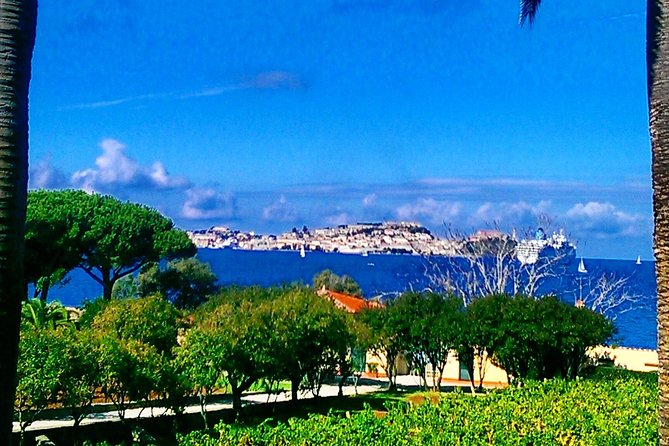
The reward here is visual as well as historical. From the fortifications, you should expect views across the walls, towers, and coastline. One of the strongest details associated with the experience is this combination of military stonework and sea views. Bring a camera, but also pause long enough to see how the fortifications frame the town.
There is a practical limit. The tour does not promise a detailed visit to all three forts, and entrance fees are not included. If you want to enter a specific fortress, ask whether it is part of the walking route and budget separately for admission.
The Carmine church becomes the Teatro dei Vigilanti
The next stop is the church of the Carmine, which Napoleon transformed into the Teatro dei Vigilanti in 1814. This is one of the tour’s most unusual changes of purpose: a religious building became a theater during Napoleon’s time on Elba.
That shift tells you something about the kind of life Napoleon tried to create during exile. He was not only a political figure confined to an island. He also reorganized local spaces and brought courtly habits, entertainment, and ceremony into Portoferraio.
For you, the value is in seeing how one building can carry two identities. The former church gives the tour a different rhythm from the forts. Instead of focusing on defense and state power, the theater points toward performance, social life, and Napoleon’s wish to maintain a public world around himself.
Admission is not included, so the guide may explain the building even if you do not enter. If seeing the interior matters to you, check the opening arrangements and entrance cost before the tour. The supplied information confirms the stop, but not the exact admission procedure or whether a ticket is required on your chosen date.
Same water, a different day out:
- Group Capri tour , visit of caves, fishing legend and swimming
★ 5.0 · 50 reviews - Bari:Private Boat Trip over “Gozzovigliando”, fishermen boat
★ 4.9 · 42 reviews - Private tour with fishing, tour of Capri and lunch on board
★ 5.0 · 26 reviews - Bari: Fishing experience aboard an authentic fishing boat
★ 4.9 · 25 reviews
Napoleon’s main residence on Elba
The final major stop is the main residence Napoleon used during his exile. This is the point where the story becomes most personal. The forts show how rulers protected and controlled Portoferraio, while the residence shows where Napoleon lived and worked during his short period on the island.
A visit here helps put the exile into proportion. Napoleon’s stay on Elba is famous, but the tour does not treat it as a vague legend. You are led to the place tied most directly to his daily presence in Portoferraio. An art historian can help you look at the house as a designed space, not only as a historical address.
Expect the residence to be one of the busiest parts of the tour in terms of questions. You may want to ask how Napoleon used the building, how it related to the town, or how his presence affected local life. The private setup gives you room to shape that conversation around your own interests.
Again, entrance fees are extra. The tour price covers the professional guide and private service, not access to the attractions. This distinction is important because a low-looking tour price can rise after tickets are added. It is best to treat $360.48 as the cost of the guiding experience for your group, then add any admission charges.
What the private format is worth
The tour costs $360.48 per group of up to 10 people. That works out to about $36 per person if you fill all 10 places, before entrance fees. For five people, the guiding cost is about $72 each, and for two people it is about $180 each.
That pricing makes the tour most attractive to families or friend groups traveling together. The private format also gives you control over the pace and questions, which can matter more than a small price difference if you want a focused explanation of Portoferraio.
For a solo visitor or couple, the cost is much harder to justify unless a private art historian is exactly what you want. A shared walking tour would usually spread the guide’s fee across more people, but this experience is specifically designed for a group that values personal attention.
The three-hour length helps the value. You are paying for a substantial block of guiding time rather than a brief orientation. Still, remember that the guide’s fee is not the complete cost. Attractions are not included, and the tour is on foot, so you should also plan for suitable clothing and shoes.
The rating provided for the experience is 4.4 from seven ratings. That is a positive sign, though the sample is small. The most specific praise focuses on Lucille’s guiding and on the combination of Napoleon’s story with views of the walls, towers, and coastline.
Walking conditions and what to wear
This is not a vehicle tour. You walk between Portoferraio’s historic sights, and the experience requires a moderate level of physical fitness. It is not recommended for people with walking problems.
Wear smart casual clothing, as requested by the operator, with comfortable shoes suitable for several hours on foot. The information does not specify the length of every walking segment or the presence of stairs, so if hills, uneven surfaces, or steps are a concern, ask before booking.
The route includes fortifications and historic buildings, so you should not plan on moving as quickly as you would on a flat street stroll. A slower pace may also help you appreciate the views and architectural details, but it can be tiring in warm weather.
Children must be accompanied by an adult. Service animals are allowed, and the meeting point is near public transportation. No private transport is provided as part of the tour.
Timing your tour around an Elba visit
The morning and afternoon start choices are useful for different kinds of days. A morning departure lets you see Portoferraio before spending the rest of your day elsewhere on Isola d’Elba. An afternoon departure may work better if you are arriving by ferry or want a relaxed start.
Since the activity lasts about three hours and returns to the meeting point, it is easy to combine with independent time in town. Do not schedule a tight connection immediately afterward, though. Ferry days can be unpredictable, and a walking tour is better enjoyed when you are not watching the clock.
The tour is also a sensible first activity if you want historical context before visiting other parts of the island. Once you understand the Medici defenses and Napoleon’s role, Portoferraio’s buildings should make more sense when you explore without a guide.
Who will get the most from this experience
I would recommend this tour to you if you enjoy architecture, military history, Napoleon, or small-town history told through actual buildings. It is also a strong fit for a family or group that wants one guide rather than several separate admissions and audio explanations.
The private structure suits groups with mixed interests. One person can ask about the Medici period, another about the theater, and another about Napoleon. You are not locked into the interests of a large group.
It is less suitable if you want a relaxed, mostly seated introduction to Portoferraio. The tour is on foot, admission costs are separate, and the short itinerary does not promise a full survey of every attraction on Elba. If you prefer beaches, scenery, or flexible wandering, you may want to use only part of your day for this experience.
Book at least a few months ahead if possible. This activity averages about 130 days of advance booking, which suggests that popular dates can fill well before arrival, especially during busy island travel periods.
Cancellation and practical booking notes
You can cancel for a full refund up to 24 hours before the local start time. Changes or cancellations made less than 24 hours before the experience are not accepted for a refund.
Confirmation is provided when you book. Before paying, check the total group size, selected start time, and likely entrance fees. The important question is not simply whether $360.48 fits your budget, but how many people will share the private cost and which sights you plan to enter.
Should you book the Portoferraio walking tour?
Book it if you want Portoferraio explained as a connected story, from Etruscan beginnings to Medici defenses and Napoleon’s exile. The private art historian format, flexible start times, and strong praise for Lucille’s guidance make it especially appealing for a group of several people.
Think twice if you are traveling alone, have difficulty walking, or want admission tickets included. For a full group, the price can be fair. For a couple, it becomes a high-cost walking tour once entrance fees are added.
If the views of the walls, towers, and coastline appeal to you as much as the history, this is a well-focused way to spend three hours in Portoferraio. Just wear good shoes, allow extra time, and confirm the fort and admission details before you go.
FAQ
How long is the Portoferraio tour?
The tour lasts approximately three hours.
How much does the tour cost?
The price is $360.48 per group of up to 10 people.
Is the tour private?
Yes. Only your group participates in the activity.
Is an English-speaking guide available?
Yes. The tour is offered in English and includes a professional art historian guide.
What sights are included?
The tour includes one of the three forts founded by Cosimo I de’ Medici in 1548, the Carmine church that Napoleon transformed into the Teatro dei Vigilanti in 1814, and Napoleon’s main residence during his exile.
Are entrance fees included?
No. Entrance tickets to the attractions are not included in the tour price.
Where does the tour start and finish?
It starts at Via Vittorio Emanuele II, 16, 57037 Portoferraio, Italy, and ends back at the meeting point.
Is the tour suitable for people with walking problems?
No. It is a walking tour requiring moderate physical fitness and is not recommended for people with walking problems. Children must be accompanied by an adult, and service animals are allowed.
Just added around Italy
- From Catania, Syracuse and Taormina: fly fishing experience★ 5.0 · 4 reviews
- Tour Monopoli★ 5.0 · 12 reviews
- Siracusa: Ortigia +sea caves +fishing experience★ 5.0 · 15 reviews
- Sorrento: Sea-Fishing Tour with Lunch Onboard★ 4.9 · 14 reviews
- From Sorrento: Fishing in Capri with Lunch★ 4.7 · 6 reviews
- Fishing Boat Experience in Monopoli★ 5.0 · 8 reviews
- Cagliari: Private or Small Group Fishing Trip Experience★ 5.0 · 6 reviews
- Bari: Fishing experience aboard an authentic fishing boat★ 4.9 · 25 reviews
Italy Fishing Trips, compared.
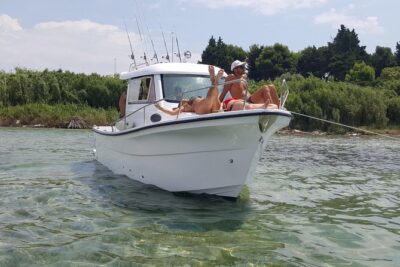
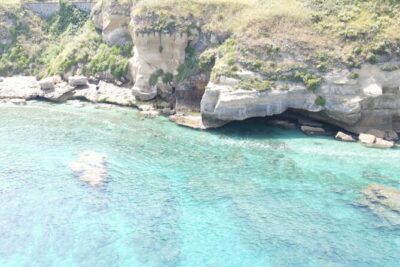
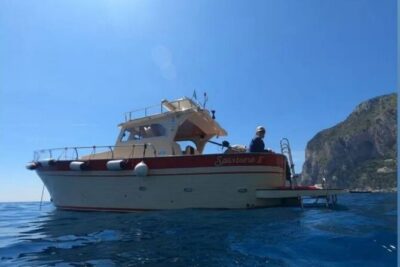
Group Capri tour , visit of caves, fishing legend and swimming
Read our review →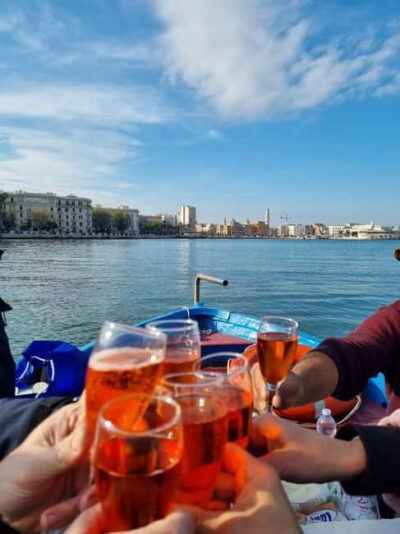
Bari:Private Boat Trip over “Gozzovigliando”, fishermen boat
Read our review →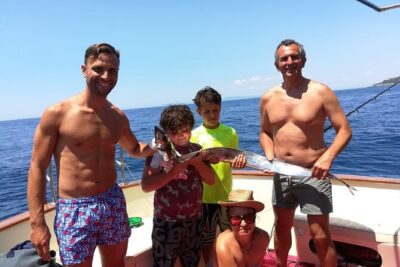
Private tour with fishing, tour of Capri and lunch on board
Read our review →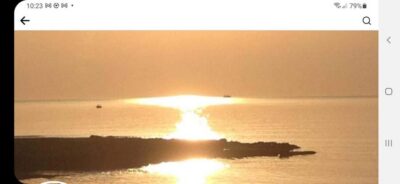
Bari: Fishing experience aboard an authentic fishing boat
Read our review →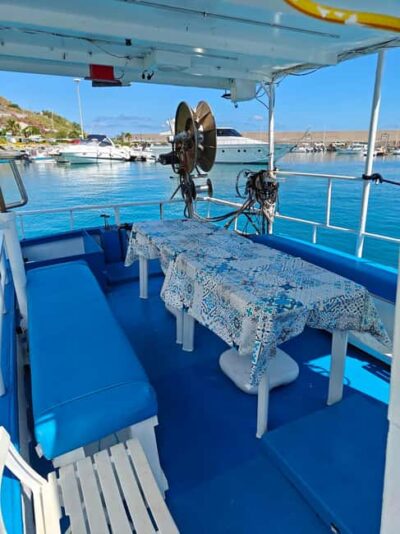
Cefalù: boat trip with fishing, coastal tour, snorkeling, and lunch on board
Read our review →Browse the lists this tour appears in